Damnatio Memoriae
translated by Monica Louzon
Just over a year ago today, I’d been preparing for a Día de los Muertos party.
Tonight, however, the nighttime rain showered my long purple hair—which carried the same mutation as the warrior heroine Giwargis—and fell onto my new bionic eyes, making my cheap makeup flee my extremely realistic chrome eyelids and lashes. I was at the artisans’ fair held at the foot of the Santa Lucía hill, searching for any wooden mask among the diverse booths, most of which had been recently closed. I’d wanted to go to this year’s party in disguise, but I’d had neither the time nor the energy to buy a costume just for going out with people I didn’t particularly like anymore.
Actually, I didn’t want to go to the party, but I should if I wanted to fit in with my former Lyceum schoolmates’ new group of friends. I swallowed a pill full of endorphins and dopamine, then a red tablet called Corceles Rojos, which would augment my emotions’ intensity. After that, another pill to make me hungry, and finally a vitamin-mineral complex for my dinner. I consumed them all while wearing my blue wool hat and big wings that responded to my emotions. The tablets left in my pillbox were for erasing memories. I was supposed to take them when I awoke or before I slept.
Something buzzed overhead: a Típula-58 Control drone—standard on every block in the city center—was scanning faces. As it flew between the spaces between the vertical hovercar rails toward the hologram of the Virgin Mary atop the hill, it contrasted with the reddish rain clouds above. I looked up, following it with my gaze, only for the rain to enter my round, metallic ocular prostheses and fall to my cheeks, tracing black tears down my face. The machine returned to its nest atop the Torre Entel a few blocks away, where hundreds of vigilant drones also nested among the hundreds of antennas and circular video screens, which always displayed the date, time, and temperature.
Almost every booth sold touristy souvenirs, many of them made from low-quality bioceramic materials. There were also chrome fabric pants and leather goods. Neon letters announced the shops’ names. Some of the storefronts hosted small holosculptures reciting the day’s discounts, while others posted their prices on black chalkboards striped with chalk. In one shop, they were even selling real photographs printed on paper. I didn’t recognize any iconic places, but that was probably a side effect of the forgetting pills I’d taken earlier.
I found the shop I was searching for: it sold different types of carved wooden masks. Among them, I spotted some Mapuche kollones, which were used in tribal ceremonies where one pretended to be someone else; some Mwana Pwo, which represented the ideal African woman; and some Ko-omote masks smiling kindly, which were normally found in Japanese Noh theaters.
I didn’t like any of them. They were expensive. Purchasing one would cost me as many credits as two weeks’ rent on a sleep pod in the megatowers behind me.
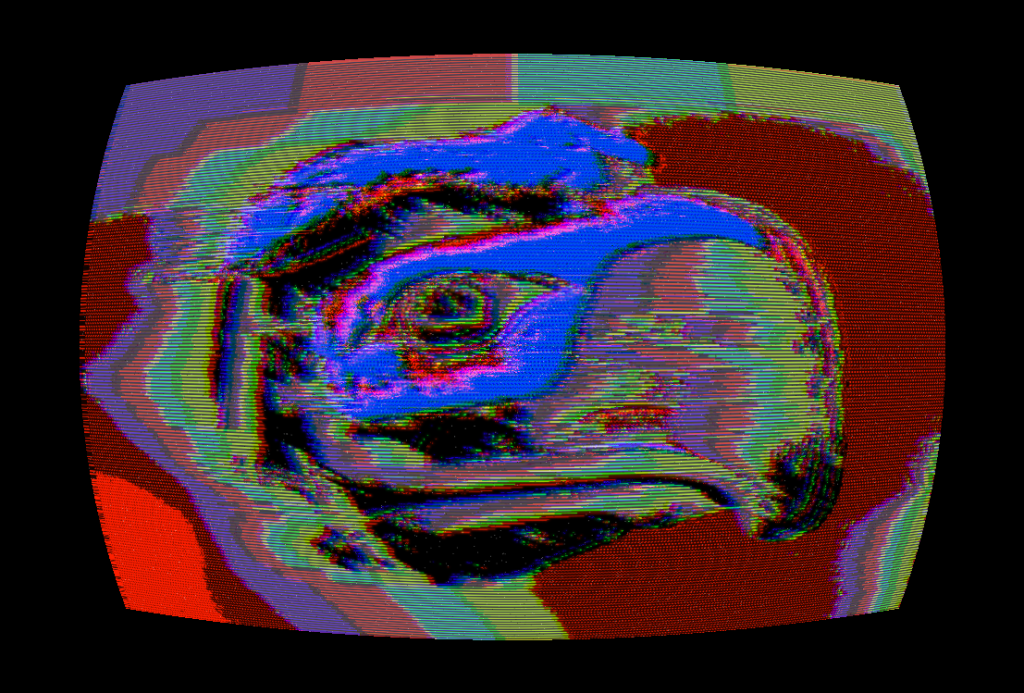
Without realizing it, I found myself staring at a Kwakwaka’wakw transformation mask with the smiling face of an eagle with its mouth half open and a human face crying out in pain peeking out of its beak.
“All of these masks are on sale,” the android vendor told me. It rested its white hand on the one that had caught my eye. “If you buy one within the next three hundred seconds, I’ll give you an extra three percent discount.”
I left.
I didn’t want to spend so much on real wood, not when I could just print something later. If I arrived at the party late, when everyone was already drunk, perhaps they wouldn’t notice the low quality of my constume—if I even decided to go at all. I’d wasted the credits I spent to enter the market without buying anything, but it wouldn’t be the first—or last—time.
I walked along the liberator Adelaida Giwargis “poplar grove’s” supra-avenue and descended into the metro, where various soldiers patrolled with their robot dogs.
I considered taking the metro toward the port so I could sit and stare at the new ziggurat, which had become my habit over the past month and a half, but I was tired. Besides, protests against the government were growing more frequent and more violent, especially at the port near the sunken buildings and neighboring destroyed marine wall.
I donned my hat, and its lines of light changed until they were white, reflecting my emotions. I verified my wallet was still tucked under my arm, then continued downward into the metro’s depths.
I swallowed a pill to shorten the duration of my trip.
#
Before I knew it, I’d arrived home. I was alone. The lights were off. Not even my holocat was on, which was good, because I didn’t feel like paying attention to it anyway. I don’t remember how I managed to install it and program it in the first place, since I didn’t know how to connect the cables or create smart home functions, much less correct the errors of a pseudo-pet.
The digital photos on the wall along the staircase were off, too—erased by me, obviously, even if I couldn’t remember doing so. Their frames didn’t even have default photos of flowers or mountains: just blank, electronic ink screens, some of which were cracked.
When I went into the bathroom, the light turned on automatically and blinded me for a few seconds before I could manually adjust the iris aperture in my new eyes, using a magnetic screwdriver along my temple for the task. I opened the cabinet and pulled out a dreaming pill, a sleeping pill, and one norepinephrine inhibitor. I also grabbed a Lethe pill for forgetting.
The holocat meowed, startling me and making me drop my pillbox. I collected them and badly organized them. I couldn’t even take my medications properly. I stayed sitting on the floor for a bit, unable to sort them as the bathroom light moved slowly, elongating the shadows.
The feline hologram approached my legs. It had probably been activated by the bathroom light. I called out the command to turn it off, then swallowed the pills—in the wrong order.
In my confusion, instead of taking a Lethe tablet first, I took a Corcel Azul, which amplifies your imagination and takes you far, far away from consciousness.
I managed to stash the pill case in the bathroom before I slept.
I began to dream before I fell asleep: the first floor flooded, turning into an ocean with dolphins bursting from its surface, and as the cold water climbed, it soaked me, so I climbed, too, guided by Chilean toninas up the stairs to the second floor. Then, the whole house disappeared except for the staircase, and far off in the distance, I saw a sea turtle emerge from a big Japanese castle. Along the stairs were pictures of me standing next to a blurry figure: in front of a lake, on a hill covered with yellow flowers, on a beach—all next to a ghost, a creature made of noise.
I thought I was drowning, but then blue dolphins carried me far, far away.
#
The smart home’s voice roused me.
“Today is the Día de los Muertos! Today’s high will be fifteen degrees Celsius, with a chance of rain.”
I didn’t even know how I’d managed to lay down in the bed and sleep on my side last night. I looked at my nightstand, searching for a coffee-colored tablet: NeoCafeína. The name was laser-etched into its side next to a flower. I bit into the pill. Its bitter juice jolted me awake immediately.
In the kitchen, next to the fridge, I pushed the button for cat food. The holocat wandered across the walls like a ghost. There was a small glitch, and it started running over and over again toward its plate, like déjà vu.
With some effort, I brought out my makeup-artist-in-a-box and placed it on the dining room table. A few seconds after I sat down in front of it, it had already cleaned my face, applied foundation, and painted my lips with red and white lines. Then, it started on chromatic tints for my eyes, but I’d forgotten to press the option for ocular implants—I still wasn’t used to them—and the machine broke its brushes on them.
Frightened, I manually cleaned my mechanical eyes as best I could and unplugged the makeup artist. I didn’t have time to fix the brush problem, because I was already running late.
I selected one of the many jackets I kept hanging behind the door: a men’s leather jacket. The house warned me that it wasn’t the best choice with today’s weather forecast. The jacket I’d picked was thicker and provided more shelter than my work blazer, so I stuffed the blazer into one of its pockets and placed a wide-brimmed hat with lights on my head and departed.
My fingers brushed against a metallic box in one of the jacket’s pockets, but I ignored it.
#
My commute led me through the city center on foot, surrounded by video screens, names of businesses drawn in neon, and holographic ads. I would arrive on time despite my late departure! I was overjoyed.
In my haste on that cold October morning, I’d forgotten my pillbox, because it hadn’t been in its usual spot next to my keys in a box beside the door. I’d even forgotten to take the Lethe pills before I’d left home. At first, my mistake didn’t bother me, but little by little, I began to feel how emotions assembled themselves around my edges, like little shadows hovering in the corners of my digital vision.
I paid two credits to use the building’s lift. When I reached my floor, I paid another credit so I could enter the office, which looked like a low-end café.
The lobby was full of office workers, which, when combined with the hour, meant the lift pricing for access to my actual office area surged slightly. While I waited my turn, one of the managers arrived in a hurry and paid for a premium pass. A lift immediately arrived to carry him directly to his floor—much to the annoyance of the rest of us, although no one would say so aloud.
In the end, I arrived late. They docked fifteen minutes of my pay, even though they still hadn’t paid me for the overtime I’d worked.
#
Before my coworkers saw me, I hurried to the bathroom, where I donned high heels, adjusted the white lines on my lips, and adjusted my skirt and blazer. Threads of light ran along my blazer’s hem, changing color with my emotions. They usually shone white, but I noticed a hint of light blue on the sleeves in keeping with the current fad. I didn’t want to attract attention by dressing too differently.
I greeted everyone with two kisses on the cheeks and gave my female friends tight hugs, although those didn’t come naturally to me. I smiled and sat down at my station.
An android with the body of a large, strong man who dressed in elegant clothes brought me a Neocafé with milk from a real cow. Out of habit, I looked for my pillbox so that I could be hungry, but it wasn’t there. I set the coffee on a counter.
When the robot began walking back toward the kitchen, one of my coworkers stopped it to slip a skull mask over its head. Meanwhile, some of my other coworkers tasked themselves with hanging decorations up around the office: jack-o-lanterns with lights inside, robotic spiders that wove real webs, and an assortment of ghost holograms.
My boss Andrina appeared, accompanied by a young, dapper male executive. Andrina was a tall, svelte woman with long platinum hair, and the man beside her was even taller, skinnier, and paler than she. He had unusually long arms and an exoskeleton that was almost invisible beneath the cloth jacket and trousers he wore. Probably a second-generation space man.
He looked at me with his big eyes and smiled. Perhaps some other time, I would have felt nervous or flirty, but today, I was neither.
“…the Earth opened up and Persephone returned from the Underworld with the monsters and demons that wander the land on Día de los Muertos,” my boss was explaining, “Children are supposed to give them candy.”
“Oh, yes. We also celebrate the Eve of Thesmophoria,” the man replied with a distinct space accent. “The western stations celebrate the same holidays.”
“There are gatherings today in the common cemetery, and there’ll be a big party later. I have three ex-spouses: two are dead, but I didn’t want to talk to them when they were alive. That hasn’t changed now that they’re dead.”
“I’m sorry to hear that.”
“Do you also celebrate Sol Invictus?” Andrina didn’t wait for a response. “Ooooh, you should come with me to see Santa Danzante, the dancing saint! They say that today she Broke-Reality and the town is teaming up for an improvised carnaval.” She swallowed a fistful of pills, then offered some to her companion, but her charity was in vain. Andrina escorted him to a meeting room, which automatically opaqued its glass walls when they entered.
A friendly middle-aged female coworker approached me: Señora Mónica.
“I know it’s hard, hija. This happens to us all,” she told me cryptically, then left.
A few minutes later, she returned with some chamomile tea. After years of working together, she knew when I felt well, bad, or worse — even when I myself wasn’t aware. She left the tea next to my keyboard, then placed a knitted wool shawl around my shoulders.
“Thank you.”
“Don’t worry, hija. Not a year goes by when I don’t think about my son. He died in the war,” she said. “Helping makes me feel good. Useful.”
I took her worn hand and squeezed it lovingly, smiling. She returned the gesture.
“That must be so hard on you,” I said, sipping the tea.
“You know it is. But I remember him every day. I still send him messages. When I call his phone and he doesn’t answer, I still find myself assuming that he’s busy like always. He never had time for me, you know. My pain reminds me of my love for him. I don’t want to go to the cemetery and talk to his mimic. That thing isn’t him, although I’m almost grateful to interact with a digital copy. I hope you don’t end up like that,” she said, clearly struggling. “I wish I’d never let him go.”
“Everything will be okay, eventually,” I replied. “Someone told me that once. I like to believe it.”
“The memory of love is stronger than any pain leading to oblivion. The pain reminds us that the love was important.”
She fell silent, trying not to cry, then wiped a tear from her cheek and returned to her office.
The masculine android walked between stations, looking for something to do. It saw my empty teacup and placed it on a tray that, until that moment, had been hidden in its back.
“Thank you,” I said.
“You’re welcome. It’s my pleasure to help you.”
I examined it. The realistic skull mask, when combined with its elegant suit and bow tie, gave it a dark air. Normally, the android didn’t have a face, no eyes for crying or mouth for shouting. Now, the human cranium stretched over its blank face, seeming to speak without moving its mouth.
“Is it, though? A pleasure to serve me?” I asked. “Does your job make you happy?”
“Of course. That’s correct. I was created to serve.”
“You’re a liar.”
The robot calculated its response for a second. “Of course. That’s correct. I was created to lie so that humans might be happy. My programming does not permit me to have any emotions of my own, but humans don’t seem to need me to appear very human. It’s a Catch-22, because I must always possess positive sentiments. And yet, so many users have declared their desire for me to have a bad day that Prodüce is considering creating an update that will introduce negative emotions — but only in a minimal and superficial way that will remain socially acceptable.” With that, the android continued on.
I checked my mail and found a government survey from the Regulatory Reality Department. They wanted to know my age, if I had children, if I was single. I was uninterested, but I completed it. Then, I resumed asking the computer to change the camera angle for the ad spot on new tractor models.
#
At lunchtime, my coworkers invited me to join them. I’d just wanted to be alone, but I acquiesced, smiling even though Señora Monica wasn’t with us. She was the only person in the entire company who was actually nice to me.
A server deposited a Caesar salad before me and I grinned. When he left, everyone congratulated me on flirting with him as the lights bordering their clothes took on an envy-green hue.
“I suppose you’re still not ready to start dating again?” asked the secretary, but she didn’t wait for my response. My coworkers’ chatter melted into white noise, a deafening void that made me want to scream as my chair seemed to grow larger, swallowing me as the table lengthened. I had no appetite, so I didn’t eat. I was drowning in all the fake smiles and superficial conversations.
“Amanda, why aren’t you eating? Aren’t you hungry?” asked Andrina in her smooth contralto voice.
I shook my head.
“Clearly, you forgot your hunger pills today. Here you go: one to make you want to eat, and another that will make your appetite go away. My nutritionist designed them.” She placed the two pills on the table in front of me.
“Thanks. Why are they custom-made?” I asked.
“My system is so used to taking supplements that I’ve lost the neurotransmitters for feeling normal hunger. Without these, I’d never eat. I’d die of hunger like our last manager.”
“The one you replaced?”
“Yes. Officially, she retired, but she’d been working remotely ever since the war started. She did that for three years and a quarter, until the conflict ended. She refused to return to the office, and she didn’t want to eat anymore. Her cat apparently devoured what little skin was left on her face.”
“I hope that doesn’t happen to Monica,” the secretary said.
“Ugh, she’s always so dramatic. Always talking about her son who died in the war. I lost my third spouse in that same war, and my uncle in the first War of the Metals. She should forget about him and move on. We all lose someone at some point.”
Everyone but me laughed.
“Hey, can you imagine someone forgetting their calming pills? I don’t know how I’d be able to take such a useless meeting and fill out lines and dates in a planner,” she continued.
I lost myself, gazing into my cup of water.
For a second, it seemed like the surface of the water was a stormy sea and I was sailing a wooden sailboat on it that had just shipwrecked from all the wind and rain.
#
Andrina interrupted me later, when I was staring out the window, feeling how pain slowly reached me.
“Amanda, I told you you have to present the automatic tractor sales for this trimester,” she said with a fake smile.
“Oh, right. Thanks. I’m coming,” I said, but she was already gone.
I opened a drawer, looking for my notes. I found two passes to see the aerostatic balloon festival on La Isla to celebrate Sol Invictus at the end of December. Both tickets were torn.
#
In the meeting room, Andrina had already placed a calming tab on the table for me. Habit made me cut it precisely in half while she tried to connect the holoprojector.
As I pulled up my presentation, several executives arrived by jetpack and landed outside the room’s gigantic window on the terrace. It wasn’t raining anymore, and I could see the distant hills and snowy mountains while tiuques and sparrows flew between the massive towers.
“Martín quit,” Andrina announced.
“Why?” I didn’t look at her.
“They offered him Executive Manager over the new submarine division for harvesting seafood at Prodüce. He told me that they want to use personal data from local fisherfolk to influence their purchases of fishing drones.”
“Prodüce makes underwater drones now, too? Since when?” asked one of the executives.
“They acquired Locustus for their drones first, and then another business that makes biomimetic submarines that mimic crab-whales.”
“The kunijiras that were genetically modified?” asked another executive.
“The very same. Prodüce has more drones now than there were during the second War of the Metals.”
“I feel like I know someone who used to work there… Anyway, that seems like the same technique we use to sell our tractors. Señora Mónica, did you give them your idea?” I was still focused on connecting cables as I spoke.
“She’s not here. They just fired her,” my boss said. “Prodüce gave us a bonus for her idea and then forced us to let her go. The best part is that we’ll be able to duplicate our technomarket budget for next year.” Laughter filled the room.
“We’ll have the best ad campaign and publicity… until they decide to buy us out for our harvest machines. They already have the monopoly on tons of seeds,” I said, forgetting where I was. I heard several nervous chuckles behind me, followed by an uncomfortable silence.
When I finally finished connecting the cables and pulled up the presentation, I took a deep breath. I feigned a big smile, straightened my chrome skirt, and placed my intracutaneous chip over the projector’s reader to pay the usage fee. I turned around. The windows went opaque and the lights turned off, except for a spotlight centered on me. Several holograms of yellow tractors with mechanical feet appeared on the table at the center of the room.
I started my presentation.
#
As the afternoon progressed, the sky grew even more overcast. The window next to my station displayed the weather in real-time, including all the air pressure, temperature, humidity, and wind direction data. The air conditioner raised the ambient temperature
I still had to go to the Día de los Muertos party and fit in, because I wouldn’t anywhere else. I already barely saw my former friends. There were new people in their group, and many friends had become hikikomoris.
Each time I saw them, I felt more distant and disconnected from my former schoolmates. My best friend had been chosen to board an Arca Generacional and help found a new colony. The strongest students had won invitations to go live on La Isla, where they could dedicate themselves to the arts and sciences without having to worry about paying bills ever again. Almost all of my university classmates now worked on geosynchronous space stations, many of them working for Skorpius or even Prodüce. Meanwhile, I was still working at a medium-sized corporation. At university, I never had the time for close friends, so my current coworkers and former schoolmates were the only ones I had left.
Anxious, I tasked myself with searching the intranet for local costume shops. Instead of purchasing what I had originally searched for, I ended up buying a neural crown for stopping nightmares—although I couldn’t afford the premium version, which came with fewer oneiric ads.
The air conditioner must have raised the temperature, detecting it growing colder outside, and I was getting too warm. I took off the wool shawl Señora Mónica had lent me that morning. I went to her station to return it, but her workspace was empty.
I’d forgotten that she’d been fired.
Discouraged, I returned to my own station and stored it in one of the drawers with broken rails.
The Día de los Muertos party was in just a few hours, and I still didn’t have a costume.
Perhaps I could arrive fashionably late, after everyone had the chance to grow inebriated. Even if no one noticed my presence, at least then I could say I’d been there.
I opened the Gatcha app and bought several envelopes, trying to win images to add to my collection. I got a rare this time. There were a lot of people who’d pay a lot of credits for this one, but I didn’t want to let something special go only to regret it later.
I bought a chromatic dress and shoes on sale as Andrina downed a cupful of pills before she headed into another meeting.
#
I walked through the rain without any music active in my auditory implants. I moved out of obligation, dragging my feet with that ancient, profound sadness of unknown origin. Lost between the tall crystalline towers, alone, I entered an ever-denser jumble of people.
Strangely, I didn’t want this to end. I wanted to feel it all—for the first time in quite a long time.
The Kwakwaka’wakw mask, which was more like a helmet than a mask, rested in the cloth bag I carried.
I listened for Santa Danzante’s carnaval and spotted her from afar: a young barefoot woman in a white dress, dancing in the middle of the street while a multitude of followers protected her from those trying to attack her. She was deep in a trance, with her mind in another dimension. She was one of the few who’d reached a better place on her trip, courtesy of two pills: Nostalgika and Fascina.
I could have been her.
I shoved my hand into the inner pocket of my leather jacket for the first time. I discovered a transparent container containing thousands of chrome icosahedrons that reflected the light, splitting it into reflective rainbows.
Just one of these pills commanded a price equivalent to six months of my salary. I didn’t know how it ended up with me.
Nooztalgika, the container said.
Noztalgika. The drug that could carry me deep into my past that never was, or into a future that I’d never see—according to the words etched into the little container.
A couple was watching the procession, hand-in-hand. Without knowing why, the sight made me profoundly sad and I began to weep.
The festive parade sounded in the distance, while Santa Danzante danced. She was beautiful and terrifying.
And free.
#
The effects of all my pills were still wearing off. Little by little, my hunger returned. So too did my anxiety, my unfounded sadness, and the constant urge to cry. I wanted to scream, to laugh, to jump for joy.
I sat in the lobby of my ex schoolmate’s building for over an hour, which felt like an eternity, debating whether to go up or not. Perhaps it was time to let my old friends go forever, to be alone.
When I finally entered the party, nobody noticed me even though the lights came on and the rhythmic music stopped. Everyone was wearing disguises except for me. I was wearing the chromatic dress over my black underclothes, all under my men’s leather jacket.
I grabbed a bottle of pisco and poured some into a plastic cup, then added a bit of Sorbete Letelier. I preferred the drink’s cherry flavor to that of the Coca-Cola—or, failing that, a Pepsi Crystal—traditionally required to make a Piscola.
#
The rain washed the cheap dye from my hair, leaving traces of color as the black rinsed away, and wiped away my makeup, leaving my face bare and naked.
The effects of my last forgetting pill had stopped.
I could remember our life together. After all these years of silencing my memories, there were only disconnected scenes of love and pain.
Even so, I could feel again, and everything felt like an exposed nerve, all at once. I’d spent so much time ignoring my feelings that now they hit me with greater intensity — but they weren’t burying me.
As everyone danced inside the home-office, I cried and screamed.
I let the rain bathe me.
I remembered how you said goodbye to me in the spaceport, with handcuffs on your hands and feet. You fled the guards and dashed toward me, but I hadn’t wanted to see you.
Remember me, you’d shouted as the guards pummeled your ribs.
You’d fallen to your knees, your long hair covering the face that I couldn’t remember anymore.
Remember me when you’re in the universal silence of space. And if you forget me for a while, and then remember me, don’t be sad. It’s better to forget and smile than to remember and be sad.
Then, they carried you off to the penal space station Yakrah, where you never arrived. The Mirada Alegre, the spaceship that carried prisoners to Yakrah, was destroyed en route.
It’s too late now. I’ll never see you again.
Like Hades, you were waiting for me in the land of the dead and oblivion, but like Persephone, I’d returned to the surface without looking back.
When I used the Lethe pills to forget you, you died for a second time.
Everyone inside was still dancing, oblivious to me standing outside. I realized that they didn’t wear masks just for the holiday: they always wore them, every day, repressing their emotions with chemicals. My female coworkers wore expensive makeup to impress other women, casting their very selves aside to fit in.
You’d been the one who thought you’d spend the rest of your days in profound solitude and horrible cells, but it was I who ended up trapped in the land of melancholy.
Trembling from the wet cold, I tucked my hands into your leather jacket’s pockets, finding one of my calming pills next to a silver coin.
Damnatio memoriae. Condemnation of memory: they erased your identity, forced everyone to forget you, but a love as deep as ours always leaves a trail.
I tossed the calming pill away, toward the street ninety floors below. A drone watched it fall, following the pill’s trajectory with its camera.
I wanted to keep crying in the rain, but my eyes had no tears left.
I should have lived through my pain back then. I should have tried to recover your memory, but that would have entailed feeling more pain than I could handle at the time. Perhaps there were stronger people out there, people more used to feeling, who could have.
But now, I was one of them.
Looking at the metallic container with the pills inside, I considered how expensive Noztalgika was, about how I’d never be able to pay for it, then I remembered I hadn’t. You’d stolen it for me, before you left me to spend the rest of your life on Mars.
#
A year ago, you’d arrived at nightfall, wounded and exhausted. You’d given me a box with both hands, placed it carefully in my palms, as if it were a recently hatched bird.
“If I’m going to lose you forever, perhaps instead of forgetting me, you could live with me in an alternate dimension. A perfect reality where we’re together forever.”
“How did you manage it?”
“I used my company’s drones. Locustus makes the best drones there are,” you’d told me.
A week later, they’d trapped you before you could take the spaceship to the underground colonies on Mars.
Two weeks after that, I’d said goodbye to you in the spaceport, and then they’d carried you off toward the penal station Yakrah.
#
It was much later, still the evening of Día de los Muertos, when it stopped raining and the voices inside fell silent. Everyone was asleep, drunk, and exhausted after celebrating the day of the dead.
I was still awake. In one hand, I held a Lethe pill for forgetting. In the other, I held a Noztalgika. I could live with you forever, in that future that would never happen—the one I’d missed so much despite never even knowing it.
The memory of your voice coils in my head: Everything will be okay — eventually.
You always used to say that. Until this very moment, I’d never believed you.
I didn’t take either pill. For the first time in a long time, I decided to feel your departure.
I. A. Galdames, Chilean science fiction writer born in 1987. He is a self taught web developer and yesterday’s jam. His short stories have been published in the anthology Neon Dreams and Nightmares, Anapoyesis Magazine, Espejo Humeante magazine, Penumbria magazine, Axioma magazine, Iguales magazine and Teoría Omicrón.
His writings are mostly science fiction, exploring loneliness, isolation, time perception and existentialism, with expressionist inspirations, cyberpunk and neo-noir. He has published two books: Corceles Azules and Corceles Rojos, two fix-up cyberpunk anthologies. He can be found at: http://ignaciogaldames.com
Monica Louzon (she/her) is a queer USian writer, translator, and editor from Maryland. Her fictions have appeared in Archive of the Odd, Paranoid Tree, Shoreline of Infinity, and others. Her story “9 Dystopias” was a Best Microfiction 2023 winner. To learn more about Monica and her work, please visit https://linktr.ee/molowrites.
Damnatio Memoriae
Hace un poco más de un año me preparaba para la fiesta del día de los muertos.
La lluvia nocturna caía por mi largo cabello morado, con la misma mutación que la heroína de guerra Giwargis, hasta mis nuevos ojos biónicos, corriendo mi maquillaje barato alrededor de estos, con pestañas y párpados extremadamente realistas para estar hechos de metal cromado, mientras buscaba una máscara de madera en los diversos puestos de la feria artesanal frente al cerro Santa Lucía. Quería ir a la fiesta disfrazada, pero no había tenido tiempo ni ánimo de comprar un traje para ir con gente que no me caía bien, pero la mayoría de las tiendas cerraban. Más bien, no quería, pero debía ir, si quería encajar en el nuevo grupo de amigos de mis ex compañeros de Lyceum. Tragué una pastilla con endorfinas y dopaminas, junto a una píldora roja, llamada Corceles Rojos, para aumentar la intensidad de las emociones, una pastilla para tener hambre y luego un compilado de vitaminas y minerales como cena, mientras sostenía mi sombrero de lana azul, de grandes alas con luces que respondían a mis emociones en su contorno. En mi pastillero quedaron las que borran la memoria, porque debía tomarlas al despertar y al dormir.
Escuché un zumbido sobre mi cabeza. Un dron Típula-58 de Control, estándar en cada bloque del centro de la ciudad, escaneaba los rostros, en contraste a las nubes rojizas de lluvia. Voló hacia el holograma de la Virgen María en la cima del cerro, entre el espacio que había entre cada carril vertical de sobreautos. Por mirarlo, la lluvia entró en mis prótesis oculares, redondas y metálicas, y corrió desde ellos hasta mis mejillas, dibujando lágrimas negras sobre mi rostro. La máquina volvió a su nido en la alta Torre Entel, a pocos bloques de distancia, dónde los cientos de drones de vigilancia tenían sus nidos, entre las cientos de antenas y la pantalla de video circular, que mostraba la fecha, la hora y la temperatura.
Casi todos los puestos vendían souvenirs turísticos, gran parte de ellos hechos con biocerámicas de mala calidad, pantalones de tela cromada y artesanía en cuero. Los nombres de las tiendas estaban anunciados con letras de neón. Algunos tenían pequeñas holoesculturas anunciando los descuentos y otros tenían los precios en pizarras negras rayadas con tiza.
En una tienda vendían fotografías reales, impresas en papel. No reconocí ningún lugar icónico, un probable efecto secundario de las pastillas para olvidar.
Encontré la tienda que buscaba. Tenían diferentes tipos de máscaras talladas en madera. Tenían algunos Kollones Mapuches, usado en ceremonias tribales donde solían fingir ser otro; Mwana Pwo africanas, que representaban a la mujer ideal y máscaras japonesas Ko-omote del teatro japonés Noh, sonriendo amablemente. Ninguna me gustó. Además estaban caras. Cada una costaba el equivalente en créditos a dos semanas de arriendo por un pod de sueño en las megatorres a mi espalda.
Me quedé mirando con atención una máscara de transformación Kwakwaka’wakw. Era un rostro sonriente de águila abierto por la mitad y detrás de este, un rostro humano gritando en agonía.
—Todas las máscaras están con descuento. Si compra en los próximos trescientos segundos, le añadiré un tres por ciento de descuento. —me dijo el androide vendedor, posando su mano blanca sobre esta.
Me fui. No quise gastar tanto en madera real, cuando podría imprimir algo. Si llegaba tarde, cuando todos estuviesen ebrios, quizás no notarían que mi disfraz era de mala calidad, si es que decidía ir. Desperdicié los créditos que pagué por entrar y no comprar, pero no sería ni la primera ni la última vez.
Caminé por el costado de la Supra-avenida, la Alameda de la libertadora Adelaida Giwargis. Bajé hasta el metro, dónde varios soldados caminaban junto a sus perros robots.
Pensé en tomar el metro hacia el puerto y sentarme a mirar el nuevo Zigurat, como era costumbre en el último mes y medio, pero estaba cansada. Además, las protestas contra el gobierno eran cada vez más frecuentes y más violentas, sobre todo en el puerto, cerca de los edificios hundidos junto al antiguo muro marino destruido.
Me coloqué el sombrero, cuyas líneas de luz cambiaron a color blanco, para reflejar mis emociones, afirmé mi cartera bajo mi brazo y descendí hacia las profundidades del metro.
Tomé una pastilla para acortar el tiempo de viaje.
#
Casi sin darme cuenta, llegué a casa, sola. Las luces estaban apagadas en la silenciosa habitación. Ni siquiera mi hologato estaba encendido. No quería ponerle atención. Yo no sabía cómo conectar los cables, ni crear las funciones del hogar inteligente y mucho menos corregir los errores de la seudomascota. No recuerdo cómo conseguí instalarla y programarla en primer lugar.
Las fotografías digitales en el muro de la escalera habían sido borradas. Obviamente por mí, aunque no lo recordara. Ni siquiera tenían las fotografías de flores y montañas por defecto. Solo eran pantallas blancas de tinta electrónica, algunas de ellas trizadas.
Fui al baño y la luz se encendió automáticamente, cegándome por unos segundos, antes de que yo ajustara manualmente la apertura de los iris en mis nuevos ojos usando un destornillador magnético junto a mi sien. Abrí el mueble y saqué una pastilla para soñar, otra para dormir y un inhibidor de norepinefrina, además de una Lethe para olvidar. El gato maulló y me asustó. Dejé caer la caja con pastillas.
Era una estúpida que ni siquiera podía tomar sus medicamentos bien. Las recogí y organicé, pero lo hice mal. Me quedé sentada en el suelo por un instante, incapaz de recogerlas. La luz del baño se movía lentamente, alargando las sombras.
El holograma del felino se acercó a mis piernas, probablemente activado por la luz del baño. Grité el comando para apagarlo de nuevo y tragué las pastillas, pero en el orden equivocado y en vez de tragar una Lethe, la confundí con un Corcel Azul, que amplía la imaginación y lleva lejos, muy lejos en la conciencia.
Guardé el pastillero en el baño y no junto a la puerta.
Comencé a soñar antes de dormir, imaginando como el primer piso se inundaba y convertía en un mar y varios delfines salían a la superficie. El nivel del agua fría subía, ahogándome, así que subí las escaleras hacia el segundo piso, guiada por Toninas chilenas.
Toda la casa despareció, con excepción de la escalera. Lejos en la distancia vi un gran castillo japonés desde donde una tortuga marina se alejaba.
En las escaleras habían fotos mías junto a una figura borrosa. Estaba frente a un lago, junto a esa forma borrosa, en un cerro lleno de flores amarillas, junto a un fantasma y en una playa, junto a una criatura hecha de ruido.
Sentía cómo me ahogaba, pero los delfines azules me llevaron lejos, muy lejos.
#
La voz de la casa me despertó.
—Hoy es el día de los muertos. Se espera una máxima de quince grados celsius y lluvia parcial.
Ni siquiera supe cómo me acosté y me dormí en mi lado de la cama. Busqué en mi velador un comprimido de color café. NeoCafeína V, decía en su costado junto a un grabado láser de una flor. La mordí y su jugo amargo me despertó de inmediato.
En la cocina, junto al refrigerador, presioné el botón de comida de gato y este atravesó los muros, como un fantasma. Hubo un pequeño glitch y este volvió a correr hacia su plato, como un deja vü.
Con dificultad saqué la caja con mi maquilladora y la coloqué sobre la mesa del comedor. Me senté frente a esta y en pocos segundos me limpió el rostro, aplicó la base y me pintó los labios, con rojo y líneas blancas y luego los ojos, con tintes cromados, pero olvidé presionar la opción para implantes oculares, aún sin acostumbrarme a tenerlos y la máquina rompió sus pinceles.
Asustada, limpié mis ojos mecánicos cómo pude y desenchufé la maquilladora. Ya iba atrasada y no tenía tiempo para solucionar ese problema.
Detrás de la puerta tenía colgadas muchas chaquetas. Saqué una, pero la casa me advirtió que no era la correcta para el pronóstico del clima. Saqué una chaqueta de cuero de hombre, más gruesa y abrigadora y guardé mi chaqueta de ejecutiva en una bolsa. Me coloqué mi sombrero de ala ancha con luces y salí. Sentí una caja metálica en un bolsillo, pero no le di importancia.
#
Me alegré al saber que iba a tiempo, a pesar de salir más tarde. Debido a que salí apurada, olvidé mis pastillas, que siempre reposaban junto a las llaves, en una caja al lado de la puerta. Al principio no me importó. No sentí nada. Pero poco a poco sentí cómo las emociones se colaban por la periferia, como pequeñas sombras en el rabillo de mi visión digital. Incluso olvidé tomar las pastillas Lethe del olvido.
Caminé por el centro de la ciudad, rodeada por pantallas de video, nombres de negocios dibujados en neón y hologramas publicitarios, en una fría mañana a finales de Octubre.
Las ginoides, atrapadas dentro de escaparates, vestían máscaras tenebrosas, que contrastaban con los vestidos de lujo y sus cuerpos voluptuosos.
Pagué dos créditos por usar el ascensor y cuando llegué a mi piso, pague uno más para entrar a la oficina, el equivalente a un café de mala calidad.
El vestíbulo estaba lleno de oficinistas. Debido a esto y la hora, el precio dinámico del ascensor para mi trabajo subió ligeramente. Uno de los gerentes llegó apurado, pagó un pase premium y un ascensor bajó y lo llevó directamente a su piso, para el malestar de todos los demás, aunque nadie dijo nada en voz alta.
Llegaría tarde de todas formas y me descontarían quince minutos del sueldo, aunque no me pagaran las horas extras.
#
Antes de que me vieran, entré al baño. Me coloqué los zapatos de tacón, ajusté la línea blanca en mis labios y ajusté mi falda y chaqueta. Varios hilos de luces recorrían los bordes de la chaqueta, cambiando de color según mis emociones. Generalmente brillaban de color blanco, pero me pareció notar que tenían un pequeño tinte celeste, en las mangas. Era la moda y no quería llamar la atención vistiendo de forma diferente.
Saludé a todos, con dos besos y a mis amigas con fuertes abrazos, aunque no me nacía. Sonreí y me senté en mi puesto de trabajo.
Un androide vestido con ropa elegante, con el cuerpo de un hombre grande y fuerte, me trajo un neocafé con leche de vaca real. Por costumbre busqué la píldora para tener hambre, pero no estaba. Dejé el café en un costado.
Cuando el robot iba caminando a la cocina, una de mis compañeras de trabajo lo detuvo y le colocó una máscara de calavera.
Las demás chicas se dedicaron a colocar calabazos con caras luces dentro, arañas robóticas que tejían telarañas reales y varios hologramas de fantasmas.
Un joven y apuesto ejecutivo caminaba junto a Andrina, mi jefa. Una mujer alta y esbelta, de cabello largo y plateado. El ejecutivo era aún más alto, delgado y pálido, con los distintivos brazos largos y un exoesqueleto casi invisible debajo de los pantalones de tela y la chaqueta de vestir. Probablemente era un espacial de segunda generación. Me miró con sus ojos grandes y sonrió.
Tal vez en otra época me habría sentido nerviosa o alegre por un coqueteo, pero no.
—Hoy se abre la tierra y Perséfone vuelve del inframundo, junto a monstruos y demonios que deambulan por la tierra. Los niños deben dar dulces —explicó mi jefa.
—Oh sí, nosotros también celebramos la víspera de los Santos Tesmoforios. Las estaciones occidentales celebran las mismas festividades —dijo con su distintivo acento espacial.
—Hoy hay descuentos en el cementerio general e incluso habrá una gran fiesta. Yo tengo tres ex esposos, dos de ellos muertos, pero si no quería hablar con ellos cuando estaban vivos, menos ahora.
—Lo lamento mucho.
—¿Incluso celebran Sol Invictus? Uy, deberías acompañarme a ver a la Santa Danzante, dicen que hoy Rompió Realidad y le están preparando un carnaval improvisado —dijo Andrina, tragando un puñado de pastillas y ofreciéndole en vano a él.
Andrina lo escoltó hacia una sala de reuniones, que automáticamente obscureció sus vidrios cuando entraron.
La señora Mónica, una amable mujer de mediana edad se acercó a mi.
—Sé que es difícil, hija. Pasé por lo mismo —me dijo, crípticamente.
Algunos minutos más tarde volvió con un té de manzanilla. Tras años de conocerme, sabía cuando yo me sentía bien, mal o peor, incluso cuando ni yo misma la sabía. Lo dejó junto a mi teclado y colocó un chal de lana tejido por ella sobre mis hombros.
—Gracias.
—No se preocupe, hija. No ha pasado un año desde que mi hijo murió en la guerra. Me hace bien servir. Me siento útil —me dijo.
Tomé su mano ajada y la apreté con cariño, sonriendo. Ella hizo lo mismo.
—Debe ser difícil —dije bebiendo el té.
—Sabes que sí. Pero lo recuerdo todos los días. Aún le envío mensajes y cuando lo llamó por teléfono y no contesta, asumo que está ocupado igual que antes. Nunca tenía tiempo para mí. El dolor que siento es un recordatorio de mi amor por él. No quiero ir al cementerio y hablar con su mimeto. No es él, aunque hoy sea casi gratis interactuar con su recreación digital. Espero que no caigas en eso. Cuando pienso en mi hijo, desearía no haberlo dejado ir. —dijo con dificultad.
—Todo estará bien, eventualmente. Alguien me lo decía. Me gustaría creerlo.
—El recuerdo del amor es más fuerte que un dolor que lleve al olvido. La pena nos recuerda qué fue importante.
Se quedó en silencio, un momento, intentando no llorar. Limpió una lágrima en su mejilla antes de ir a su oficina.
El androide caminaba entre los puestos, buscando qué hacer. Vio mi taza vacía y la dejó sobre una bandeja que hasta ese momento tenía oculta en su espalda.
—Gracias —le dije.
—No hay problema. Es un placer ayudarla.
Lo miré con atención. La máscara realista de calavera en conjunto con su traje elegante con corbata de moño le daban un aire tenebroso. Normalmente no tenía rostro. Sin ojos para llorar ni boca para gritar, ahora el cráneo humano sobre su rostro blanco parecía hablar sin mover la boca.
—¿Lo es? ¿Es un placer servirme? ¿Te hace feliz tu trabajo? —le pregunté
—Así es. Eso es correcto. Fui creado para servir.
—Eres un mentiroso.
El robot calculó sus respuestas por un segundo.
—Así es. Eso es correcto. Fui creado para mentir, solo así ustedes serían felices. Aunque mi programación aún no me permite tener emociones propias, los humanos parecen tener la necesidad de que no parezca muy humano y caiga en el valle incómodo, pero al mismo tiempo tenga sentimientos positivos todo el tiempo. Y aún así, muchos usuarios han exclamado sus deseos de que yo tenga un mal día, así que Prodüce está pensando en cargar una actualización que introduzca emociones negativas, pero solo en forma mínima y superficial, que es lo aceptado socialmente.
Revisé mi correo y encontré una encuesta del gobierno. Departamento de regulación de la realidad. Me preguntaban mi edad, si tenía hijos o estaba soltera. Lo respondí sin interés y continué pidiéndole a la computadora que cambiara el ángulo de la cámara para el spot publicitario de los nuevos modelos de tractores.
#
A la hora del almuerzo, mis compañeras me invitaron a comer, pero solo quería estar sola. Aún así, las acompañé sonriendo.
Me llamó la atención no ver a la señora Mónica, la única persona amable de verdad conmigo en la empresa.
Un mesero me dejó una ensalada césar y me sonrió. Cuando se fue, todas sonrieron y me felicitaron por coquetear con él y vi las luces en sus ropas se tornaban de color verde-envidia.
—Supongo que aún no estás lista para salir —me dijo la secretaria.
No tenía apetito, así que no comí. Sentí como me hundía en mi asiento, entre sonrisas falsas y conversaciones superficiales.
La conversación de mis compañeras de trabajo se transformó en un ruido blanco, mientras sentía cómo la silla se hacía más grande y la mesa se volvía lejana. Aquel ruido blanco era al mismo tiempo un vacío de ruido y ensordecedor, haciendo que quisiera gritar.
—¿Amanda, no estás comiendo? ¿No tienes hambre? —me preguntó Andrina, con su suave voz de contralto.
Moví mi cabeza de un lado a otro, negando.
—De seguro olvidó sus pastillas para tener hambre. Toma, acá hay una para querer comer y acá hay otra para que se te quite el apetito. Las diseñó mi nutricionista —me dijo, dejando dos pastillas frente a mi.
—Gracias. ¿Por qué son hechas a la medida? —pregunté apenas.
—Ya no las puedo dejar. Mi sistema se acostumbró tanto a los suplentes, que perdí los neurotransmisores para pasar hambre normalmente. Sin ellos, no querría comer nunca y moriría de hambre como la ex gerente.
—¿La que usted reemplazó?
—Si. Oficialmente se retiró, pero trabajaba de forma remota desde que empezó la guerra. Estuvo así los tres años y tres meses, hasta que terminó el conflicto y luego se negó a volver a la oficina y no quiso comer más. Su gato le comió la poca piel que le quedaba en el rostro.
—Ojalá no le pase lo mismo a Mónica —dijo la secretaria.
—Ay, es que era tan exagerada. Siempre sufriendo por el hijo que murió en la guerra. Yo perdí a mi tercer esposo en la misma guerra y a mi tío en la primera guerra de los metales. Debería olvidarlo y seguir adelante. Todos perdemos a alguien en algún momento.
Todas rieron.
—Uy, ¿se imaginan una olvidara los calmantes? No sé cómo aguantaría tanta reunión inútil y rellenar tanta fila de datos en una planilla —continuó hablando, mientras yo me perdía en el vaso de agua.
Comí mi ensalada y por un segundo me pareció que la superficie del vaso era un mar tormentoso y yo navegaba en un barco de madera con velas que naufragaba debido al viento y la lluvia.
#
Miraba por la ventana, sintiendo como la pena llegaba lentamente a mi.
—Amanda, te recuerdo que debes presentar las ventas del trimestre de los tractores automáticos —me dijo Andrina, fingiendo una sonrisa.
—Oh, si gracias. Ya voy —le dije, pero ella ya no estaba cerca.
Abrí un cajón, buscando mis notas y encontré dos pasajes para ver el festival de globos aerostáticos en La Isla, a finales de diciembre, para celebrar Sol Invictus. Ambos pasajes estaban rotos.
#
Dentro de la sala de reuniones, Andrina me dejó un calmante sobre la mesa. Lo corté por la mitad con precisión gracias a la costumbre, mientras intentaba conectar el holoproyector.
Mientras preparaba la presentación, varios ejecutivos llegaron en sus jetpacks y aterrizaron en la terraza, afuera de un gigantesco ventanal. Ya no llovía y podía ver los cerros lejanos y la cordillera nevada, mientras algunos tiuques y varias golondrinas volaban entre las gigantescas torres.
—Martín renunció —dijo Andrina.
—¿Por qué? —pregunté sin mirar.
—Le ofrecieron ser gerente ejecutivo de la nueva división de submarinos para recolección de mariscos, en Prodüce. Me dijo que quieren usar datos personales de los pescadores artesanales para influir en la compra de los drones pesqueros.
—¿Ahora también hacen drones submarinos? ¿Desde cuándo? —pregunté sin mirar a quién hablaba.
—Primero adquirieron a Locustus, por sus drones. Luego a otra empresa por unos submarinos con que imitan a las ballenas cangrejo.
—¿Las kunijiras creadas genéticamente? —otro ejecutivo preguntó.
—Esas. Prodüce tiene más drones ahora que en la segunda guerra.
—Tengo la sensación de conocer a alguien que trabajaba ahí. Pero esa técnica es la que usamos para vender nuestros tractores. ¿Señora Mónica, les dio su idea? —continué hablando mientras conectaba los cables.
—No está. La acabo de despedir. Prodüce nos dio un bono por su idea y nos forzó a dejarla ir. Lo bueno es que te podremos duplicar el presupuesto de mercadotecnia para el próximo año —dijo mi jefa y varias risas resonaron en la sala.
—Tendremos mejor publicidad hasta que decidan comprarnos por nuestras máquinas de cosecha, siendo que ya tienen el monopolio de varias semillas —dije sin pensar. Escuché varias risas nerviosas a mis espaldas, seguidas de un silencio aún más incomodo.
Cuando terminé de conectar los cables y encender la presentación, respiré hondo, fingí una gran sonrisa, alise mi falda cromada, puse el chip intracutáneo sobre el lector para pagar los créditos por usar el proyector y me di media vuelta. Los vidrios se volvieron opacos y las luces se apagaron, excepto un foco frente a mi. Varios hologramas de los tractores amarillos con patas mecánicas aparecieron sobre la larga mesa central.
Comencé mi presentación.
#
Durante la tarde el cielo se nubló aún más. La ventana junto a mi cubículo mostraba en tiempo real todos los datos de presión, temperatura, humedad y dirección del viento.
Debía ir a la fiesta y encajar, porque de otra forma no lo haría en ningún otro lugar. Ya casi no veía a mis ex compañeros. Había gente nueva en el grupo y muchos amigos se habían vuelto hikikomoris. Cada vez me sentía más lejana y desconectada de mis ex compañeros. Mi mejor amiga había sido seleccionada para ir a una Arca Generacional y fundar una nueva colonia y las mejores alumnas habían ganado invitaciones para ir a vivir en La Isla, dónde podrían dedicarse al arte o la ciencia sin tener que preocuparse por pagar alguna cuenta nunca más. Casi todos mis ex compañeros de universidad trabajaban en estaciones espaciales geosincrónicas y muchos de ellos en Skorpius o incluso en Prodüce, pero yo seguía en una corporación mediana. En la universidad nunca tuve tiempo de tener amigos. Ellos eran los únicos que tenía.
Ansiosa me puse a buscar en la intranet local tiendas de disfraces. En vez de comprar lo buscaba, compré una corona neural para no tener pesadillas, aunque no pude pagar la versión premium con menos publicidad onírica.
El aire acondicionado subió la temperatura, tras detectar que afuera hacía más frío. Me dio calor y me saqué el chal de lana que la señora Mónica me había prestado en la mañana. Fui a su puesto a devolvérselo, pero estaba vacío. Olvidé que la despidieron.
Desanimada regresé a mi puesto y lo guardé en un cajón con los pasajes rotos.
La fiesta sería en unas horas más y no tenía disfraz.
Tal vez solo debía ir, llegar un poco más tarde cuando todos estuvieran ebrios y quizás nadie notaría mi presencia, pero podría decir que estuve ahí.
Abrí la aplicación de gatcha y compré varios sobres para ganar imágenes y sumarlas a mi colección. Una de estas fue ‘rara’. Sé que mucha gente pagaría muchos créditos, pero no quería deshacerme de algo especial y luego lamentarlo.
Compré un vestido cromático y zapatos en oferta.
Andrina tomó un vaso lleno de pastillas antes de entrar a otra reunión.
#
Caminé bajo la lluvia, en silencio, sin música en mis implantes auditivos. Me desplacé por obligación, arrastrando los pies, con una tristeza antigua y profunda cuyo origen ignoraba.
Extrañamente, no buscaba terminar con esta. Quería sentirla, tal vez por primera vez en mucho tiempo.
Perdida entre las altas torres de cristal, sola entre un tumulto de personas, cada vez más denso.
Dentro de una bolsa de tela cargaba la máscara Kwakwaka’wakw, aunque más bien era un casco.
Escuché cómo el carnaval de la Santa Danzante. Solo la vi desde lejos, una joven de vestido blanco y descalza, bailando por el medio de la calle, mientras una multitud de seguidores la protegían de quienes intentaban atacarla. Pero ella estaba sumida en un trance, con su mente en otra dimensión, una de las pocas que logró llegar a un lugar mejor con el viaje de las dos pastillas: Nooztalgika y Fascina.
Podría ser yo.
Metí la mano en el bolsillo interior de la chaqueta de cuero y encontré la píldora transparente en cuyo interior habían miles de icosaedros cromados que reflejaban la luz como arco iris reflectantes.
Una sola pastilla cuyo precio era similar a la paga de seis meses, la cual no sabía cómo había llegado a mi.
Nooztalgika, decía la caja.
“Nostalgika”. Una droga que me llevaría a un pasado que nunca fue o a un futuro que nunca llegó. Decía, grabado en el metal de la pequeña caja.
Una pareja veía el desfile, tomados de la mano. Sin entender por qué, me sentí profundamente triste y quise llorar.
La fiesta del desfile sonaba en la distancia, mientras ella continuaba bailando libre, en una danza al mismo tiempo hermosa y aterrorizante.
#
Los efectos de todas las pastillas estaban pasando. Poco a poco volvía a mi el hambre, la ansiedad, la tristeza infundada y las ganas de llorar. Quería gritar, quería reír y saltar.
Estuve sentada en el lobby del edificio más de una hora, lo que sentí como una eternidad, decidiendo si subir o no. Tal vez era hora de dejar a mis antiguos amigos para siempre. Quedar sola.
Nadie notó cuando entré a la fiesta. Las luces se encendían y apagaban al ritmo de la música. Todos vestían disfraces y máscaras, excepto yo, que vestía un vestido cromático sobre mi ropa interior negra y la chaqueta de cuero de hombre.
Tomé una botella de pisco y me serví en un vaso plástico y luego le eché solo un poco de bebida Sorbete Letelier, cuyo sabor a cereza prefería sobre la Coca-Cola requerida para la tradicional Piscola o en su defecto Pepsi Crystal.
#
La lluvia lavó la tintura barata de pi cabello, dejando las raíces de color a la vista, mientras el color negro se lavaba. El maquillaje también se lavó, dejando mi rostro desnudo.
Los efectos de la pastilla del olvido se acabaron y recordé nuestra vida juntos, aunque tras años silenciando mis memorias, solo habían escenas inconexas de amor y dolor. Sentí y todo fue cómo un nervio abierto. Tanto tiempo ignorando mis sentimientos hizo que los sintiera con mayor intensidad. Ya no estaba entumecida ante ellos.
Mientras todos bailaban en el interior de la casa, lloré y grité. Dejé que la lluvia me bañara.
Recordé cómo te despediste de mí en el espaciopuerto, con esposas en manos y pies. Dejaste a los guardias y volviste corriendo a mi, pero no te quise ver.
—Recuérdame — me gritaste, entre golpes de los guardias en tus costillas.
Caíste de rodillas, con tu largo cabello cubriendo el rostro que ya no puedo recordar.
—Recuerdame cuando esté en el silencio universal del espacio, pero si me olvidas por un tiempo y me vuelves a recordar, no te apenes. Porque es mejor olvidar y sonreír, que recordar y estar triste.
Luego te llevaron a una estación espacial penal, pero no llegaste. La nave espacial Mirada Alegre, que transportaba a los presos hacia la estación espacial Yakrah, fue destruida en el camino y ahora era muy tarde. Jamás te volveré a ver.
Cómo Hades, me esperabas en el reino de los muertos y el olvido, pero como Perséfone yo había vuelto a la Tierra, sin mirar atrás y al olvidarte, tuviste una segunda muerte.
Miré hacia dentro. Todos seguían bailando, sino notar que yo estaba afuera. Entendí que no solo hoy tenían máscaras. Las tenían todo el tiempo. Las emociones reprimidas por químicos, el maquillaje caro para impresionar a otras mujeres y dejar de lado aquellas manías particulares por encajar.
Tú eras quién se suponía que pasaría el resto de sus días en profundas soledades y horribles celdas, pero yo fui quién terminó en el reino de la melancolía.
Temblando de frío metí las manos en tu chaqueta de cuero. Encontré uno de mis calmantes junto a una moneda de plata.
Damnatio memoriae. Condena de la memoria. Borraron tu identidad y nos forzaron a olvidarte. Pero un amor tan profundo seguía dejando una huella.
Lancé la pastilla hacia la calle, noventa pisos más abajo. Un dron vigía la siguió con su cámara.
Quise llorar bajo la lluvia, pero mis ojos ya no tenían lagrimales.
Debería vivir mi dolor, debería tratar de recuperar tus recuerdos, pero eso significaría sentir más pena de la que podía soportar. Tal vez hay personas más fuertes, más acostumbradas a sentir. Pero yo era una de ellas.
Mirando la caja metálica con la píldora en su interior, pensé que era cara y que no pagaría por ella y recordé cómo no lo hice, como fuiste tú quien la robó para mi, antes de irte a vivir para siempre a Marte.
#
Un año antes era de noche, cuando llegaste herido y cansado. Me entregaste la caja con ambas manos y la dejaste con cuidado sobre mi pala, como un ave recién nacida.
—Si te perderé para siempre, tal vez en vez de olvidarme, puedas vivir conmigo en una dimensión alterna. Una realidad perfecta en la que seguimos juntos para siempre.
—¿Cómo la conseguiste?
—Usé los drones de mi empresa Locustus tiene los mejores drones que hay —me dijiste.
Una semana después te atraparon antes de subir a la nave espacial hacia las colonias marcianas en el subsuelo.
Dos semanas más tarde me despedí de ti en el espacio puerto, cuando te llevaban hacia la estación espacial penal.
#
Más tarde, en la noche del día de los muertos, dejó de llover y las voces del interior se silenciaron. Todos dormían, ebrios y cansados de celebrar el día de los muertos.
En una mano tenía una pastilla del olvido y en otra una Nooztalgika, para vivir contigo en aquel futuro que nunca pudo pasar, que tanto extraño incluso sin saber cómo es.
Pero tu voz se coló en mi cabeza. “Todo estará bien, eventualmente” siempre decías, aunque hasta ese momento nunca te creí. No tomé la pastilla y decidí sentir tu partida, por primera vez en mucho tiempo.
* * *