All Bodies Fall Apart
The call came while Caldera was hiking through the soft green light of a rhododendron tunnel on a trail in the Great Smoky Mountain Rewilderness. Caldera frowned—in preparing for his absence from his work, he’d made substantial effort to remove himself from the population of people one could contact. His curiosity won, and he answered.
“You were supposed to be back already.” The name had shown blank, but the voice belonged to Caldera’s dispatcher, who brokered his services as a factotum.
Caldera sighed. “I’m on hiatus. You’ve got other hands. The new fellow.”
“Gone. He lit out to the Central Asias. I’ve sent a client to see you. I need to eat even if you like to live skinny. Work out a contract. Or we’re done.”
The grief had come upon Caldera early this year. He’d decided to leave the City for Appalachia. No motors, no concrete, no offsite power. Just mountain and sun and rain and birdsong. Clearing trails and chopping wood, until the exertion burned dark moods and thoughts from his mind.
But perhaps the prospect of having no steady income nibbled at his tranquility, if you could call it that.
“I’ll talk to them.”
“She’s actually outside your cabin. Took the vactrain.”
Caldera scowled. “You know, there’s a big green world full of dispatchers just like you.” He terminated the connection then backtracked and emerged from the trees into the small clearing around his hired cabin. A woman waved at him from his front porch. Simultaneously, a thousand hit his occupational account.
“I’m listening,” he said. He attempted to identify the woman. His request sought her data: facial, movement, and entry records. It returned with a person-shaped void.
She stalked over, her whip-cord muscles flexing under her skin like those of some mountain cat. “No need for that. I am Edith-Solange of the family Mitterrand.”
He knew the name. The family Mitterrand was one of the old trillionaire clans, well capable of keeping their own house factotum. “How may I possibly be of service to you?” asked Caldera.
“I want you to oversee a death.”
“As a firm rule, I conduct legal business.”
“As you will when you visit the client in the City. Philadelphia zone.”
“Which ontology?”
“Centruum. Very few can visit.”
“Surely you employ someone who can.”
“You’d think. Like you, our house factotum holds a white-card passport, but we have had a… family disagreement. He is uncertain who to take orders from and will not act.”
“The vagueness as to your own authorization to hire me inclines me to refuse. And, again, I am no sicario.”
“I am the head-of-family’s representative outside Centruum.” She presented a notarized certificate. Caldera nodded. “And there’ll be no killing. The client is very old and wishes to decease. She needs assistance.”
“Neither am I a doctor.”
“Centruum has very old, contradictory rules regarding bodily autonomy. Euthanasia is legal, but suicide is not. The old lady has full citizenship, and she forbade us from coming. She believes the family would try to stop her.”
“Maybe you should respect her wishes.”
“She is my ancestor, to whom I owe and provide filial obedience and respect. Unfortunately,” Edith-Solange’s voice broke. She paused to wipe at her eyes and continued, “she does not trust any of us. Mostly, she is correct.”
“Except she’s wrong about you.”
“I’ve looked after her since I was a child. Her body has been dying my entire life. Now she can’t move, can’t eat, can’t speak without mechanical assistance. There is now only one way her life can be extended.”
“To move her consciousness elsewhere.”
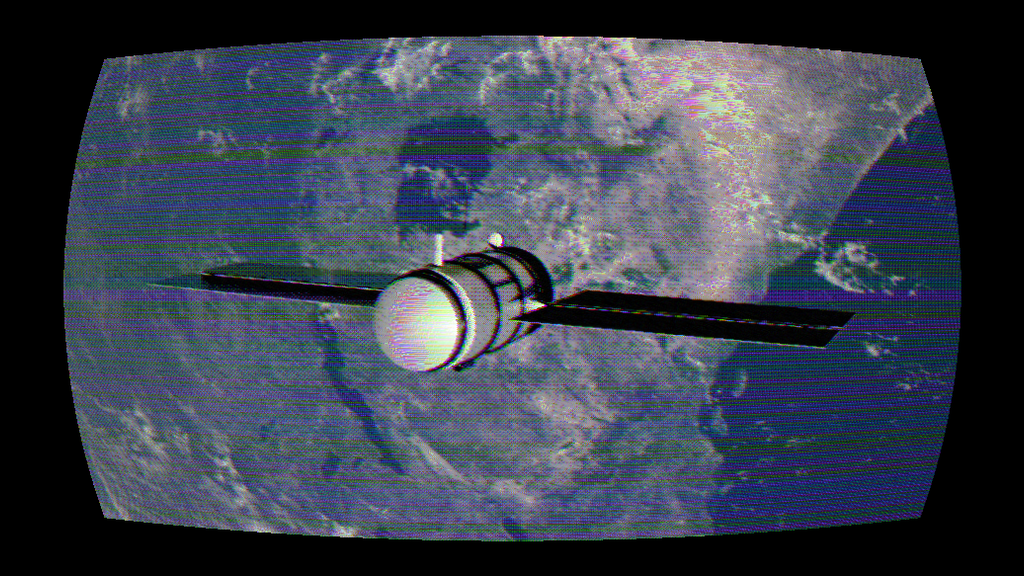
“Precisely. Like most ultrawealthy of her era, she was assassination-proofed. She has an anima embedded in a low-orbital bankbox.”
“A bankbox? How old is she, anyway?”
“Five hundred seventy some years. Older than this forest.”
“Ah,” said Caldera. Such failsafes were relics, largely obsolesced by the Reorganization. “Should I assume the family dispute centers on keeping this wealth-bearing satellite intact?”
“The funds are inalienable from the bankbox. My kin live well on the earnings, and they’ve had many decades to make other arrangements. Most have not. Our house factotum has sided with the majority who wish to leave the bankbox turned on. As my ancestor’s legal representative, it is my prerogative to send a designated agent to deactivate the bankbox. It must be done no sooner than eight hours after my ancestor’s medical death, but within one day. Provided she agrees. Which she will.”
“And if those 24 hours pass without action?”
“The bankbox assumes legal personhood with citizenship in Centruum. It thereafter cannot be deactivated. She will be a mind trapped in a machine.”
“Okay. Three times what my dispatcher told you and half up front. I’m on hiatus.”
“Those are hazard rates. This job poses no real danger. You needn’t worry.”
“Forgive my skepticism.”
She paused for half a beat—just long enough, Caldera thought, to make it seem she’d considered the matter—then said. “Fine.”
The fee registered in his account. Then she flicked him an address: The Independence House, 5th and Chestnut. “Sit with the old woman through the night.” To Caldera’s ear, old woman resonated with affection. “Witness her bio-death. Eight hours later, send the orbital into reentry.” She ticked a finger for each task.
She passed him a string of code. “Here’s the authorization key to bring the orbital down. Acknowledge receipt on the log.”
He traced his sigil in the air and pushed it back. “Done. Here’s my contract.”
She signed, then took Caldera’s hand in both of hers, raised it to her mouth, and brushed the back of his with her lips. “To seal the agreement.”
Caldera had never encountered that custom, not in all his long and far-ranging working life, but he reckoned people invented new peculiarities every day.
#
From a packed overnight bag, Caldera pulled a squib. The device, a small tube the length of his hand, emitted signal-blocking vapor. Caldera’s eyes carried cones that detected light in the infrared and ultraviolet ranges, and rods that functioned in near-total darkness. Stodgy Centruum forbade weapons and augments. Many factotums avoided bodily modifications that would hinder entry into ontologies, but Caldera had acquired these in his youth and had thus avoided their registration into public records. He ran it over his head, so it wore a cloud. This squib worked so well as to conceal its own existence. He placed it in a pocket and pedaled a public bicycle down the road to Settlement 7 Appalachia, what most resembled a town in this region.
The underground vactrain up the Atlantic seaboard took about an hour to reach the City. Caldera disembarked in Philadelphia at an ancient station teetering over the River Schuylkill. He took the local to Centruum, where a midnight-green waistcoated officer scanned him and then admitted him to the ontology.
He walked five blocks to the Independence House. The site had once held a building of honor and significance. Large fragments of that original structure protruded at Dutch angles from the aboveground facade of the newer house.
A pale-skinned functionary in a white tunic led him down a stone corridor to a chamber. In the bed lay an old woman. The old woman. Eyes closed and unspeaking, she still breathed, if barely. Tubes trailed from her nose and stomach. Caldera had seen pastry crusts more pliable than the thin and cracked skin that enfolded her skull. A halo of white hair diffused around an age-spotted pate. She looked a mummy of the sort they still found occasionally in the Andean highlands. She looked every one of her five hundred seventy some years. Caldera thought then of his own rejuvenation account, and to the funds it required to remain in good standing. He felt validation, if not enthusiasm, for having had the good judgement to interrupt his sojourn to take this job.
After some silence, Caldera coughed and said, “I’m your hired factotum.”
Without moving her withered head from its depression in the pillow, she rolled her lustrous, glazed eyes toward him. Their iridescence reached into the infrared, indicative of vapor. Then she looked the opposite wall, which held a chart on which someone had written the 40 letters of the phonemic alphabet. The woman’s eyes danced across the poster. After a minute of this, the beside monitor spoke in the pleasant tones of a synthetic voice. “Just in time. I have been unable to talk properly for a week now. I’m beyond impartial. Goddamn reader, I meant impatient.”
“I am authorized to wield power of attorney in Centruum,” said Caldera. “If you agree, I will be your representative from the time staff remove your physical body from support to the time your anima assumes legal personhood.”
“Yes, I agree. To be clear, I do not consent to the bankbox remaining intact,” said the woman. “An anima is a convenient legal fiction, but it’s not really me.”
“Here, we must necessarily disagree. I am ethically bound to follow your directives, in whatever persona you provide them, so long as they are given without duress. Even if you issue them in the form of an anima,” said Caldera. “This will be necessary to fulfill your wishes.”
He then read a long, detailed script, during which she interjected assents and the occasional clarification and profanity. Finally, Caldera forwarded the document to Centruum’s archives. “You are free to act.”
The old woman twitched one finger and produced a word with her own fading breath and body: Now.
The pale functionary glided over from the corner and adjusted the machines. Minutes passed until the rise and fall of the woman’s chest ceased.
“Bio-death is complete. Please countersign as witness on the log.” Caldera made his mark. The white person covered the old woman and left.
Caldera settled into an armchair with a book.
“Thank you for coming on such short notice.” Caldera looked around. The voice, feminine and dry, human sounding, emanated from a thin haze above the bed.
“Ah, the ghost in the bankbox speaks,” he said.
“Yes, indeed. I am become Death, monetary figures in the sky. And vapor in this room. I heard they found you in the trees.”
“I was on hiatus.”
“Me, I never took breaks until I had to. I’m rather looking forward to one.”
“I take time off when I want.”
“Many apologies for the nosiness, but why the forest?”
Intrusion from a ghost didn’t much bother Caldera, he found. It seemed inevitable somehow and left him freer than usual with his words. “Sometimes I reset with an excursion outside the built environment. My wife died some time back. She loved nature, hiking, all that. It helps to recall her.”
“Did she want to?”
“To what, die? No. Mountain climbing accident.”
“I am sorry. It hurts to lose partners like that.”
Caldera nodded, though he wasn’t sure how well she could see him. The conversation lapsed a beat, then he said, “One intrusive nose deserves another. Isn’t it hard to burn so much cash?”
“What am I going to care? This is old-style money from before the Reorganization. It can’t be transferred, not even to family. My own children tried to take me out. This was centuries back, of course. Their descendants are more docile. Somewhat. After my former heir tried to kill me and assume directorship of the family, tying my personhood to the family’s source of income seemed prudent.”
“And you’re sure you can’t be fixed?”
“I’m attached to my body. But my DNA can’t be cleaned anymore. Peek under that sheet, if you don’t believe it.”
“I saw.”
“I’d always said that I’d ride my born body into the grave. My family mostly opposes that. As much wealth they have, still the bankbox produces more. Except my great-great-granddaughter. She’s the brightest of the litters, and I trained her in my ways.”
Suspicion struck. “What does she look like?”
“Skinny as a pencil.”
“Ah.” Caldera focused on the code.
The account remained locked.
“Kiss of death,” Caldera muttered. Had Edith-Solange left some sort of mitigator on his hand along with her saliva?
“You think my great-great-granddaughter flipped to the other side and stuck a wooden shoe in my works.”
“It’s possible.”
“She was always the smartest of ‘em. If she did, then she weighed the options twice. Still, she’s my counselor! My protégé!”
“Would your descendant—” He stopped. From the hall came footsteps on stone. Caldera rose to meet whoever approached, attendant or other, but as the door opened, every muscle welded itself into a single mass. He shook and danced like a trout hooked on the line. His vision failed, and he must have blacked out because next he knew, he sat fixed to the chair. Not in the electric field or whatever they’d used to knock him down but rather bound in poly-wrap. A man sat on the bed in front of him, heedless of the corpse or its ghost. The air over the bed was inert. No sparkle of infrared. The weapon had dissipated the vapor through which the anima spoke.
“You must be the house factotum,” Caldera croaked.
The man ignored Caldera except to relieve him of the squib. He turned it around a few times to figure out its workings and slipped it in a drawer when it remained inert. By the standards of many ontologies, the man was striking, with poreless tan skin, a sharp jawline, and a lean build. A flurry of coughs took Caldera then, and the comely man offered him the glass of water he’d poured himself at the beginning of the vigil. “The staff are gone,” said the interloper. “I’m in charge of the house for the rest of our stay. You’ll behave until tomorrow?”
“You’re committing all manner of crimes in this ontology. Weapons, assault, kidnapping. They’ll take your white card. Unless you’ve bribed them enough, I suppose.”
“Is that a no? There’s one law yet I haven’t broken.”
“I’ll be good.”
“No need to break your back for these folk. I’m doing you a favor because we’re both just a couple of workers. Just remember that I can burn you dead without leaving a scorch mark on your clothes.”
“Sure. Understood.”
The interloper poured another glass of water and produced meal bars. He even left Caldera’s arms bound in front at the wrists, so that he could eat and drink.
From the back of his hand, he felt a cold tingle. He glanced down to see a cold glow in the outline of lips, the shape of a kiss. He quickly looked away, but the man hadn’t appeared to see the light.
“You’re really just a kid, aren’t you?” Caldera said. Actually young, not rejuved. He was too new for implants.
“No talking,” said the man. “I wouldn’t want to gag you.”
Something flashed three times from below. Caldera’s looked to his lap to see that his hand was illuminated in infrared glowworm trails. Which explained why the interloper continued to look straight ahead, unconcerned.
Once Caldera’s attention was on his hand, the trails formed letters in phonemic script, then spelled out statements in quick, telegraphic bursts.
I HAVE ASSEMBLED A MOLECULE AND A WAFTING DELIVERY SYSTEM. PREPARE TO HOLD YOUR BREATH FOR 1 MINUTE.
Who was talking? Grandmother? Edith-Solange? No time to ask, if he wanted to act with this advantage. Did he though? Was the trouble worth the effort?
Well, he still had the bones of a professional reputation to maintain.
By turning his hands, Caldera was able to use his thumb to trace out a short response. WHEN???
IN 5 SECONDS.
Caldera oxygenated with two deep breaths, then held. A thin haze began to emanate from his hand, driven no doubt by a system of molecular fans. Caldera fanned his arms back and forth.
“Stop that,” said the comely man.
Caldera mimed a bad smell.
The interloper held back, then pulled forth a primitive-looking handheld, which he consulted. “C4H3F7O?” he muttered. “Sevo gas? Old man, are you really trying to anesthetize me?”
It seemed the man had mods, after all. “Not my idea,” said Caldera, releasing his breath, hoping the gas was short lived. He stood and drove his head into the man’s head, bursting his nose. Howling and cupping his face, he stumbled backward. Caldera brought his arms down in a chop that resembled all the work he’d put into processing fallen trees into firewood. This rendered the bloodied man unconscious.
Caldera freed himself with a tool in the man’s pocket. He discovered the pale functionary and likely conspirator lurking outside and threatened him until he summoned help. Like most ontologies, Centruum had no police, but neighbors arrived with alacrity and evicted the interloper. One of them restored the house comms, and Caldera updated Edith-Solange.
She did not perform much surprise that someone in the family attempted a disruption.
“I suppose I’ve earned my hazard pay,” said Caldera.
“I would agree.”
“Was the gas your grandmother’s idea?” asked Caldera.
“She dabbled in chemistry. The family Mitterrand was a pharmaceutical concern in the days of old.”
“And the kiss you planted let her cook.”
“I wanted a backdoor in case something happened. My kin are meddlesome at their best. She used my contingency plan admirably.”
“You almost got this man killed, you idiot!” The thin haze speckled in infrared had returned to its place over the deathbed. Grandmother had returned.
“He’s more than capable.” Edith-Solange sounded meeker now, her voice stripped of the impassive confidence she’d had in conversation with Caldera. “Older than he seems, too. He survived the Reorganization.”
“You baited a trap. Apologize,” said Grandmother.
“I am sorry, M. Caldera.”
It seemed sincere, if dutifully done, so Caldera accepted.
“Now, before I go about the business of dying: Do you have anything else to tell me, Edith-Solange?”
“Just that I am grateful for your guidance. I hope that I can grow to wield it effectively.”
“Oh, stop. You’ll be fine. You’re four times as savvy as my second-favorite descendant.”
“Isn’t it unseemly to openly declare favorites?” asked Edith-Solange.
“Too bad. Anyway, you’ve proven to them that you’re their better. And you’ll need to keep doing that for what I hope are all the long days of your tenure as family head.”
#
Edith-Solange pleaded pressing business but promised a last farewell before the fall. Grandmother told her now was as good a moment as the other. When they’d concluded, Caldera rose to stretch his back. He poured some water from a silver pitcher.
“You know, I’m old, too. Not like you, but I go back far enough that my wife died on Mars. She wanted to climb Aeolis Mons before humanity left forever. Storm took her. Maybe they could have brought her back if they’d recovered her body, but everyone was too busy leaving to mount a search. I blamed her for being selfish, and I was so angry for a long time that I couldn’t sit still. I worked incessantly instead of feeling that. Nowadays, I take vacations some seasons when I remember her. Maybe when the light hits the buildings at a certain angle in springtime. She called it the urban solstice. I’d still do whatever to bring her back though I can’t. That never goes away.”
“So, you’re not mad at your wife anymore? For dying frivolously?”
“I didn’t say I’m not mad. I wonder whether anyone in the family Mitterrand had a similar reaction.”
“Oh, look. It’s go time, Caldera. Time to take my fall.”
“I must say that the plot against you was a confusing beast. A real chimera. Edith-Solange conspiring with the conspirators. Disabling my access but also setting up a backchannel so we could communicate.”
“She’s too smart and too young, that one. I can’t hold it against her. She didn’t even really do me harm.”
“No. And I think that’s a good way to leave things. Unless…” He paused, weighing his thoughts.
“Better be quick.”
“You sure about this? Dying? I’ve heard tell of a lady out in Rocky Mountain who put her anima in a tree.”
“You trying to talk your way out of your contract? Honestly, I always hated leaving the City. Can’t stand bugs and dirt. No, I’d only want my youthful body back.” The ghost chuckled. “I’m perfectly comfortable here in Mammon’s asshole. For a few more minutes, anyway.”
“Understood.” Caldera opened the bankbox with his mind and gave it the order to plunge.
As she descended from heaven, the ghost said, “Even if I can’t take or leave the money, I can go out remembering that I was loved.”
And so ending on that sincerity, the bankbox fell to earth, a death faint and brief across the starbright North American skies.
And Caldera, holder of many odd jobs, took a moment to finish his water before he would oversee the cremation of the old woman, and thereafter resume his hiatus in the Appalachian forest.
Frank Baird Hughes is an educator and writer of speculative fiction. His recent work appears in venues such as Escape Pod and is forthcoming in ECO25: The Year’s Best Speculative Ecofiction (Violet Lichen/Apex). He holds a doctorate in anthropology and lives in Philadelphia with his multi-species family. Ideas for stories arrive to him either during long walks around the city or, if he is forced to drive, while listening to books on science and history.